

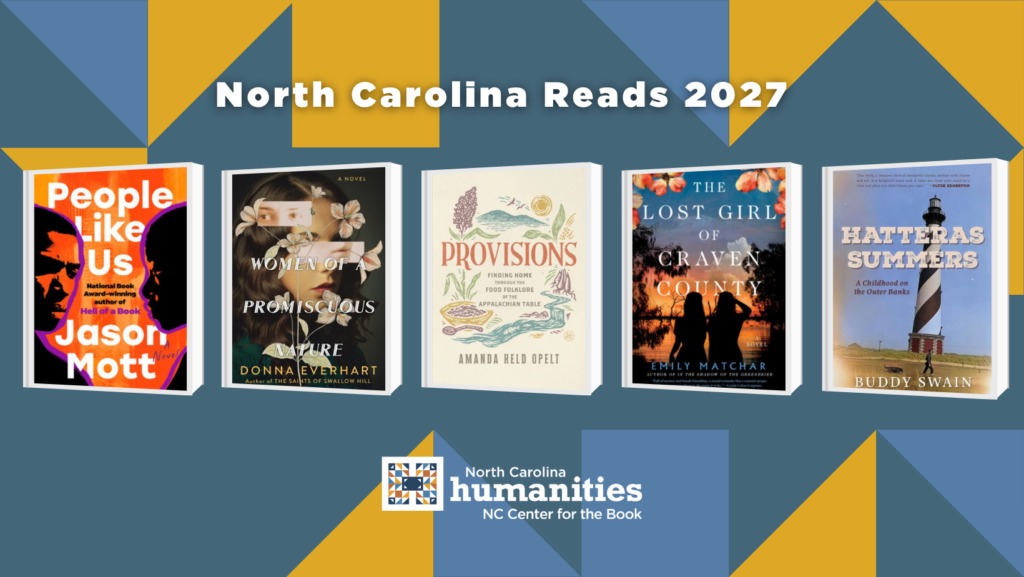
North Carolina Humanities’ award-winning statewide book club, North Carolina Reads, is returning for its sixth year in February 2027. North Carolina Reads annually features five books that explore the history and culture of North Carolina. The people, places, and events in the books offer an opportunity to reflect on how people can contribute to shaping their communities.
From February – June 2027, NC Humanities will host free, virtual, monthly book club events where participants will hear from guest speakers, including book authors and topic experts. Libraries, community groups, and individuals across North Carolina are encouraged to read along with NC Humanities, attend NC Reads book club discussion events, and then host their own local book discussions to further conversation, camaraderie, and community.
North Carolina Humanities is pleased to announce the following titles for North Carolina Reads 2027:
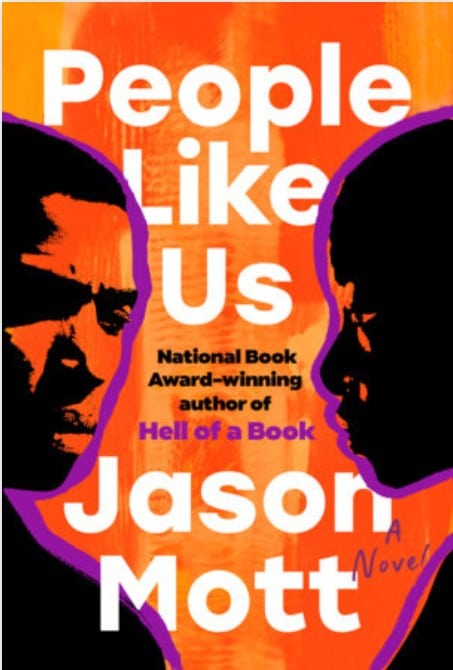
February – People Like Us by Jason Mott
Fiction
In People Like Us, two Black writers are trying to find peace and belonging in a world riven with violence. One is on a global book tour after winning a big prize; the other is set to speak at a school that has suffered a tragedy. And as the authors’ storylines merge, truths and antics abound in equal measure: from tiny French cars and melancholy winter hotel rooms, from humble family land to the wealthiest estates, this book asks us to witness people and their dreams enduring against all odds. You will meet larger-than-life characters who deliver very real takes on our world. They experience deep loss and longing; they are also buoyed by riotous humor and share the deepest love. It is the latest creation of a writer whose work will leave you breathless, filled with joy for life, and changed forever by characters who are people like us. From publisher description.
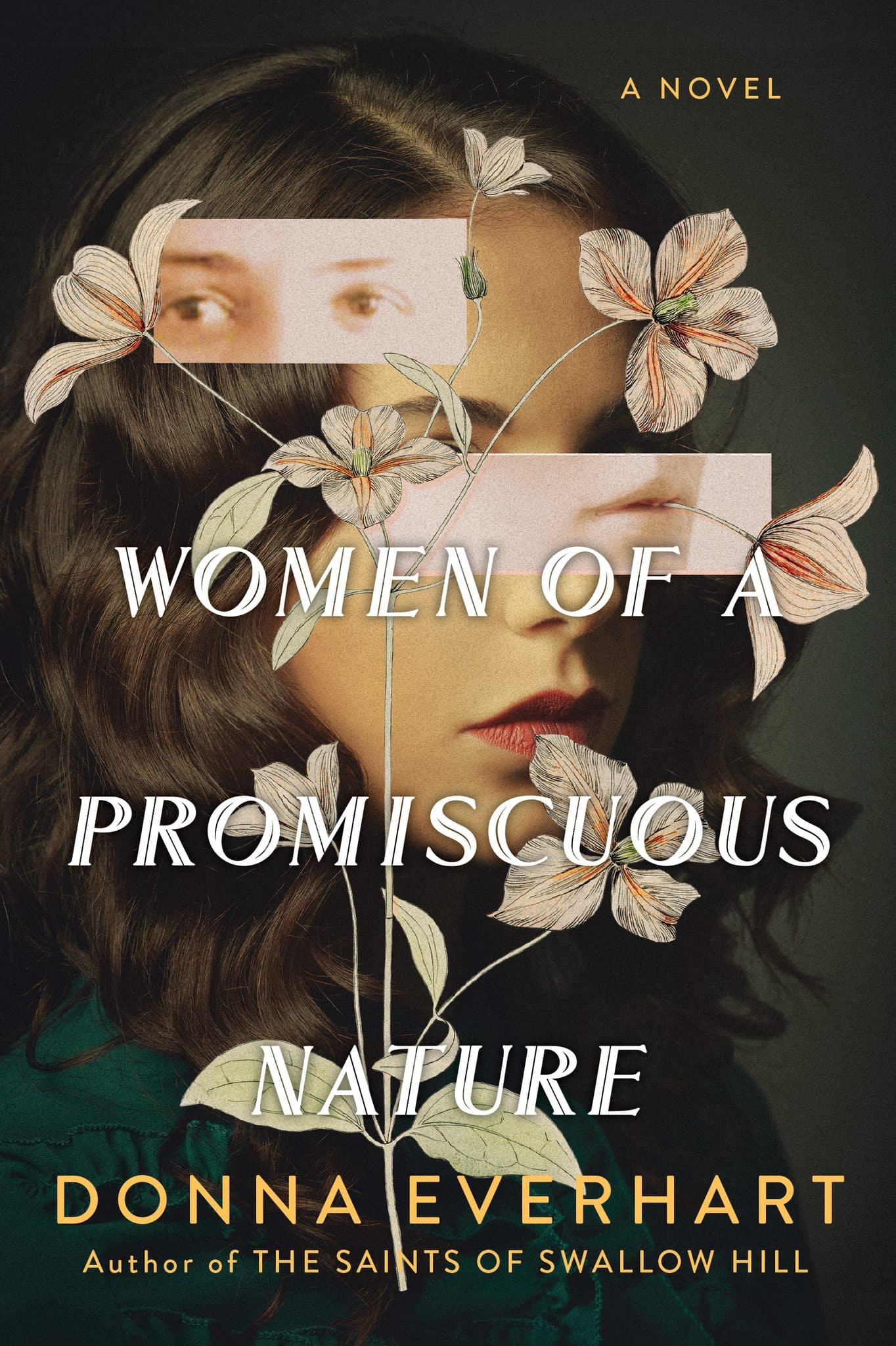
March – Women of A Promiscuous Nature by Donna Everhart
Fiction
The day Ruth Foster’s life changes begins the same way as many others—with a walk through her North Carolina hometown toward the diner where she works. But on this day, Ruth is stopped by the local sheriff, who insists that she accompany him to a health clinic. Women like Ruth—young, unmarried, living alone—must undergo testing in order to preserve decency and prevent the spread of sexual disease. Though Ruth has never shared more than a chaste kiss with a man, by day’s end she is one of dozens of women held at the State Industrial Farm Colony for Women. Some, like 15-year-old Stella Temple, are brought in at their family’s request. For Stella, even the Colony’s hardships seem like a respite from her nightmarish home life. Superintendent Dorothy Baker, convinced that she’s transforming degenerate souls into upstanding members of society, oversees the women’s medical treatment and “training” until they’re deemed ready for parole. Sooner or later, everyone at the Colony learns to abide by Mrs. Baker’s rule book or face the consequences—solitary confinement, grueling work assignments, and worse. But some refuse to be cowed. Against Mrs. Baker’s dogged efforts and the punishing weight of authority, Ruth and other inmates find ways to fight back, resolved to regain their freedom at any cost. From publisher description.
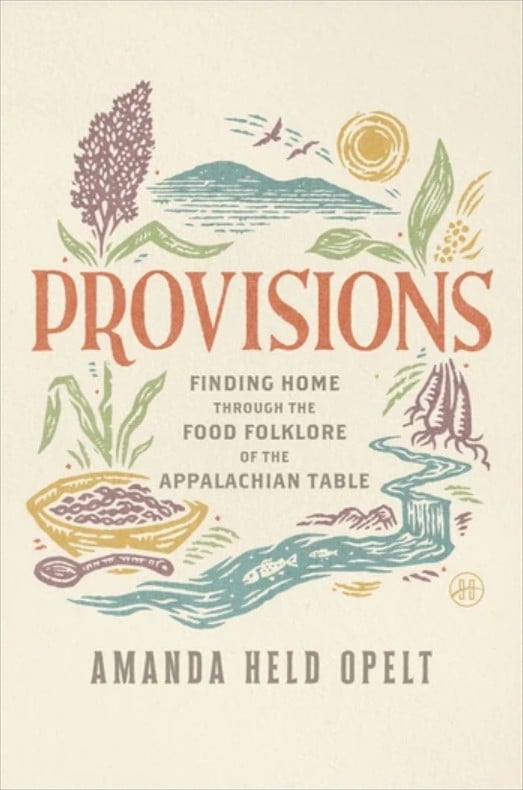
April – Provisions: Finding Home Through the Food Folklore of the Appalachian Table by Amanda Held Opelt
Nonfiction
Amanda Held Opelt’s childhood was shaped by the shared, multi-generational table that brought everyone at her Granny’s 100-acre farm to breakfast over buttered biscuits, fried brook trout, wild honey, and blackberry jam. But as she came of age at the peak of the nineties’ diet culture, her relationship with her body became fraught, and she began to resent the culinary culture of her Appalachian heritage. It wasn’t until her own daughter was born that she realized another body depended upon her nourishment. That was when she set out to learn how to cook and reclaim her ancestor’s food traditions. In Provisions, Opelt devotes herself to attending local sorghum boil parties and apple festivals, interviewing farmers, foragers, and herders, and recreating the meals she remembers her Granny serving at her own table. She confronts the false food narratives that dominated the religious landscape of her Southern, conservative roots. Along the way, she rediscovers the joy of eating, and with newfound faith learns to love her body again and the places it calls home. A love letter to Appalachia as much as a corrective to the mountain culture “hillbilly” and “tradwife” tropes, Provisions is a heart-forward exploration of the ways food draws us all into sustenance, healing, community, and delight. Opelt charts our broken relationship with food through body image, consumer culture, political stereotypes, and forgotten history, as well as the vitality that can be ours again as we: reconnect with our roots and learn to cook from our ancestors’ recipes and table traditions, unlearn our individualism and take our place at the table of nourishing community, and come home to joyful embodiment. From publisher description.
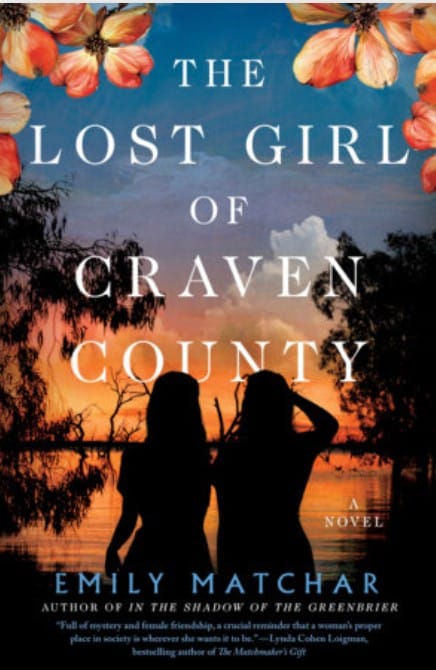
May – The Lost Girl of Craven County by Emily Matchar
Fiction
A decade into the Depression, Millicent Green is a twenty-five-year-old “old maid” living with her marriage-obsessed mother and domineering older brother in the stiflingly small Jewish community of New Bern, North Carolina. Smart and prickly, she’s struggling to find her place in the world following the loss of her beloved younger brother, and with him, her dreams for the future. One humid August day, Millie is sent to run an errand and discovers a young woman unconscious on the ground. This mystery woman, mute and without identification, will upend Millie’s life. Together, they set out on a quest that will lay bare some of the twentieth century’s most shameful episodes. From a historic river town to the hinterlands of rural North Carolina, The Lost Girl of Craven County delves into the impossibility of burying secrets forever. It’s a story of love, loss, and—above all—the indelible, world-moving power of female friendship. From publisher description.
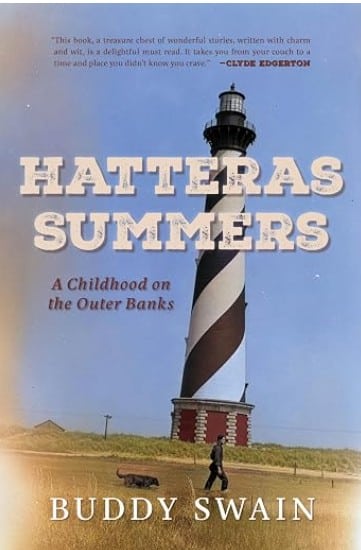
June – Hatteras Summers by Buddy Swain
Nonfiction
Nestled along the stunning coast of North Carolina’s Outer Banks, Hatteras Village is more than just a location—it’s a part of Buddy Swain’s heart. This tight-knit, isolated community served as his summer retreat from the mid-1940s to the 1960s, when his parents journeyed on a ferry and then drove down the beach to drop him off at his grandparents’ cottage for the summer. Exploring this narrow ribbon of land some seventy miles long and no more than two miles wide, Swain got to know a variety of relatives, local merchants, and anglers—each with fascinating stories to share. In this book, he shares those stories and his own, as he explored the natural beauty of this coast—its beaches and sounds, its critters and fishing bounty—and as he and his brother discover the wonders of growing up in a place that they remember with pure happiness. This book is Buddy Swain’s ode to that childhood, shared with humor, charm, and keen observation. From publisher description.
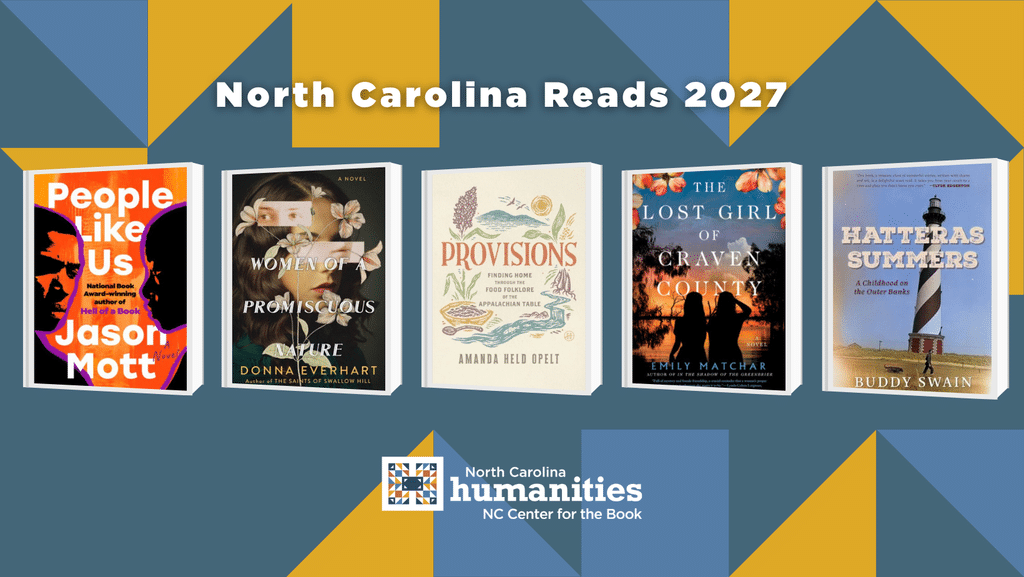
NC Humanities encourages readers to get a head start on their reading by checking with their local library or bookstore to find book copies. North Carolina Reads book club event details and online registration information will be available later this year at nchumanities.org. Please note, you do not have to read the books to participate in North Carolina Reads discussions.
To broaden access to books across North Carolina, NC Humanities continues to offer a limited number of North Carolina Reads books to readers. Discussion guides and program planning guides will also be available for free download in winter 2027 at nchumanities.org. Details on how to request a book box will be released before the end of 2026 at nchumanities.org. To receive updates about North Carolina Reads, please sign up for our e-newsletter.
NC Humanities thanks the hundreds of individuals who provided their feedback by completing NC Humanities’ 2027 NC Reads Long List Survey this summer. Learn more about NC Reads book criteria and how you can suggest a book for future programs here.
Now in its sixth year, North Carolina Reads has connected public audiences to over 60 professional and award-winning authors and topic experts. In 2023, North Carolina Reads received a national Schwartz Prize for excellence in humanities programming. All previous North Carolina Reads book club discussions are available on YouTube. Please note that selected North Carolina Reads books are intended for readers 18 and over and may not be suitable for some audiences.
Press Contact: nch@nchumanities.org
About North Carolina Humanities: Through grantmaking and public humanities programs, North Carolina Humanities connects North Carolinians with cultural experiences that spur dialogue, deepen human connections, and inspire community. North Carolina Humanities is a statewide nonprofit and affiliate of the National Endowment for the Humanities. The North Carolina Center for the Book, the state affiliate of the Center for the Book in the Library Congress, is a program of North Carolina Humanities that promotes books, libraries, literacy, and reading around the state. To learn more visit www.nchumanities.org.